

Three days · In person in Long Beach · Queer and intercultural couples · $6,000
Starts with a brief phone screen and a 50-minute initial session.
SIGNS A COUPLES INTENSIVE COULD HELP
Is this you?
After years of drift and disappointment, you're terrified to consider that your partner may not be the one for you, but you have so much invested.
From the outside you look like you have it all together. At home it's pretty quiet, and you feel more like roommates than partners.
You're both the strong one. Nobody asks for help, and both of you feel alone.
You've both done individual therapy. It helped each of you, and the relationship stayed exactly the same.
You explain, again, how things work in your family. Your partner hears an excuse, and suddenly you're defending your whole family instead of talking about what happened.
You laugh at dinner, and then you both brace, because the last good stretch ended badly.
You need a minute to cool down, so you leave the room. Your partner hears "I'm done with you" and follows you down the hall.
One of you points out how the dishwasher was loaded. The other hears "you can't do anything right." Twenty minutes later you're arguing about who has ever done anything for whom.
Underneath almost every fight is the same question: do we still have each other's respect?
Couples intensive vs. weekly couples therapy
Weekly therapy works best when
- Your relationship is stable enough to hold what comes up between sessions.
- You want to talk about something hard, go home and practice, and come back with more to work on.
- You've had success with couples therapy before and just need a tune-up.
For a lot of couples that rhythm is exactly right, and I still offer it.
An intensive fits when
- Regular weekly sessions open something up, and then you're on your own with it for six days.
- The week in between undoes the work, and the next session goes to cleaning up the fallout.
- You have wounds older than your relationship, from your family, past relationships, or how the world has impacted you.
Three consecutive days give you room to finish what you start.
Intensives sound fast, but the days themselves are slow on purpose. Getting close to old wounds stirs things up in your body. The way I plan intensives gives you time and space to stay with that feeling long enough for change to happen safely, without a week in between for the old pattern to creep back in.
WHAT HAPPENS IN A THREE-DAY COUPLES INTENSIVE
I structure my intensives to give you up to six hours of therapy a day, in person at Prospect Therapy in Long Beach. We build in plenty of breaks, including time for lunch. There's no lost time to weekly recaps, but also no exhaustion from talking about your feelings for hours at a time. We start with the truth and we see it through.
The pattern
We map the pattern you're both running, what each of you is hoping for, and what it's costing you. I don't front-load skills before we know what the issue is. You've probably been in therapy that did that. By the end of Day 1, most couples are looking at the same issue in a completely different way.
Where it started
We connect the present to the past. Where did each of you learn to fight this way, and what was it protecting? This is the deeper trauma and reparenting work, the kind the internet tells you to do while scrolling, done with support alongside you. If you could soothe an injury you've been carrying for most of your life, you'd treat the people you love differently. Day 2 takes you through this process.
Coming back to each other
Now you have a new map, and we use it. We revisit the longstanding ruptures between you: the things you never got over or repaired. Who would you be if you packed up all that baggage and put it away neatly? With this new understanding, you can finally resolve those things and feel like you have a new relationship. We build targeted skills for what each of you needs, and you internalize repair with me coaching you live. You leave with a plan for when the old pattern shows up at home.
Evenings are yours. Rest, reflect, and be together away from the work.
What you leave with
- You can see and interrupt the pattern while it's happening, instead of only being able to describe it afterward with regret.
- You feel a balance of power restored between you. Each of you knows your part in the imbalance and what to do instead.
- You've repaired old wounds, so they don't run the show when things get hard.
- You've practiced repair together, so you know you can recover from a hard moment in minutes instead of days.
- You have a plan for your first weeks at home.
- You leave as the same two people, in a different relationship.
Most of all, you get your partner back.
On their exit questionnaires, couples from recent intensives reported improvement in communication, trust, emotional connection, feeling respected, and intimacy.
Intensives are designed so you don't need ongoing weekly therapy afterward. If you'd like a tune-up later, that's available.
Not sure yet? Take the 2-minute quiz
HOW I WORK WITH COUPLES
THIS ISN'T THERAPY WHERE YOU VENT AND GET VALIDATED.
Feeling heard matters. But if being heard were enough, you'd probably be done by now.
I'm not a neutral therapist. I don't nod along while each of you rehashes the issue. The usual approach for many therapists is to build trust slowly and then eventually challenge you. I believe calling you out, lovingly and accurately, is the best and quickest way to earn trust and initiate change.
This isn't self-empowerment. It's relationship empowerment.
WHO SHRINKS, WHO TAKES OVER, AND WHY
Every relationship has power in it. The question is whether you can see it.
Sometimes the imbalance comes from outside each of you: gender, culture, class, race, who's more open about their identity, and whose family's way of doing things gets treated as the default. Sometimes it comes from inside: trauma, past relationships, and the role you played in your family growing up. Most of the time it's both.
So when I talk about power, I don't only mean identity and social constructs. I mean all the ways you might shrink or take over in your relationship. Maybe you go quiet to keep the peace. Maybe you need to be right, or you manage everything so nothing falls apart, or you say everything regardless of impact. They're strategies you adapted to survive two things: how the world sees you, and the role you played in your family. They just cost you closeness now. Ignore that, and therapy treats the surface: the chores, the unanswered text, the tone of voice. That's often why couples therapy hasn't helped before.
A therapist should be able to tell you what they believe the mechanism for change is. Mine is undoing power-over and power-under. If you're the one who takes over, we look at what it would take for you to feel safe enough to come back down to kindness and grace, for your partner and for yourself. If you're the one who shrinks, we make room for you to come back up and meet your partner face to face.
My intensives are grounded in Relational Life Therapy (RLT), the model developed by Terry Real, with my own feminist, queer and intercultural lens. I'm currently completing my RLT certification after 2 years of classes, mentorship and supervision.
“I felt a release and an eye-opening to many things.”
IS A COUPLES INTENSIVE RIGHT FOR US?
THIS IS FOR YOU IF:
You've been in therapy, and you're still stuck. The insight is there, and it hasn't been enough.
Something snapped. A rupture, a revelation, or an affair that's over and you're both choosing to stay. You need enough time and support to get through the hard conversation and come out with something solid.
You're coasting, but disconnected. You're good teammates and the logistics run smoothly, but at some point you stopped feeling close.
“We are closer. We have more conversations. I’m present every day. I tell her how much she means to me, and we connect daily on anything we feel.”
LGBTQ+ AND INTERCULTURAL COUPLES THERAPY
WHO I WORK WITH
I sit with queer couples all day, every day, focusing on lesbian, bi and queer women in relationships. I work with intercultural couples navigating different families, values and unspoken rules about how relationships are supposed to work, and with mixed-neurotype couples figuring out how their brains shape the dynamic between them. Cishet couples, non-monogamous partnerships, and couples going through religious deconstruction or big identity shifts are welcome here too.
I believe every couple is intercultural, even couples who look the same on paper. I take that seriously, and I have the training to work with it.
PATRIARCHY IS THE ENEMY OF INTIMACY.
I'm nuanced about a lot of things. Not this.
Patriarchy is the water we swim in. We're all in it, so it's not until we get out that we realize we were wet. Some of us are in deeper water or different tanks, and when we partner up, we don't realize that some of us have been swimming in more than one.
I use patriarchy as shorthand for any system that says one person can have power over another, and that they deserve it. You can't be close to someone when you have power over them, or when they have power over you. That's why this isn't a side topic in my work. It's the work.
A NOTE ON FIT
This work is direct and sustained, and it asks something of both of you.
It's probably not the right starting point if this is your first time in any kind of therapy or self-exploration. It also won't work if one of you is coming only to satisfy the other.
If there's violence in the relationship, an active affair, or active untreated addiction, an intensive isn't the right first step. We'll figure out a better first step together.
If one of you is thinking about leaving, that doesn't automatically rule you out. We'll talk about it honestly in your initial session.
How much a couples intensive costs
Start here
$225
Initial session
- 50 minutes
- Telehealth or in person
- Required before booking
A therapy session, not a sales call. We figure out what's happening and which format makes sense. Either of us can decide not to continue.
Then
$6,000
Three-day intensive
- Three consecutive days
- Up to 6 hours a day, with breaks
- In person in Long Beach
Private pay. A 25% deposit holds your dates. The balance is due 30 days before your intensive.
How to start
- A brief screening and scheduling phone call.
- A 50-minute initial session. You haven't committed to an intensive yet.
- If it's a fit, we choose your dates. A 25% deposit holds them.
- Each of you completes an intake questionnaire.
- The balance is due 30 days before your intensive.
- We meet for three days together in Long Beach.*
*In some situations we can arrange to meet outside of Long Beach. Please inquire.
The most emotionally expensive option is usually waiting.
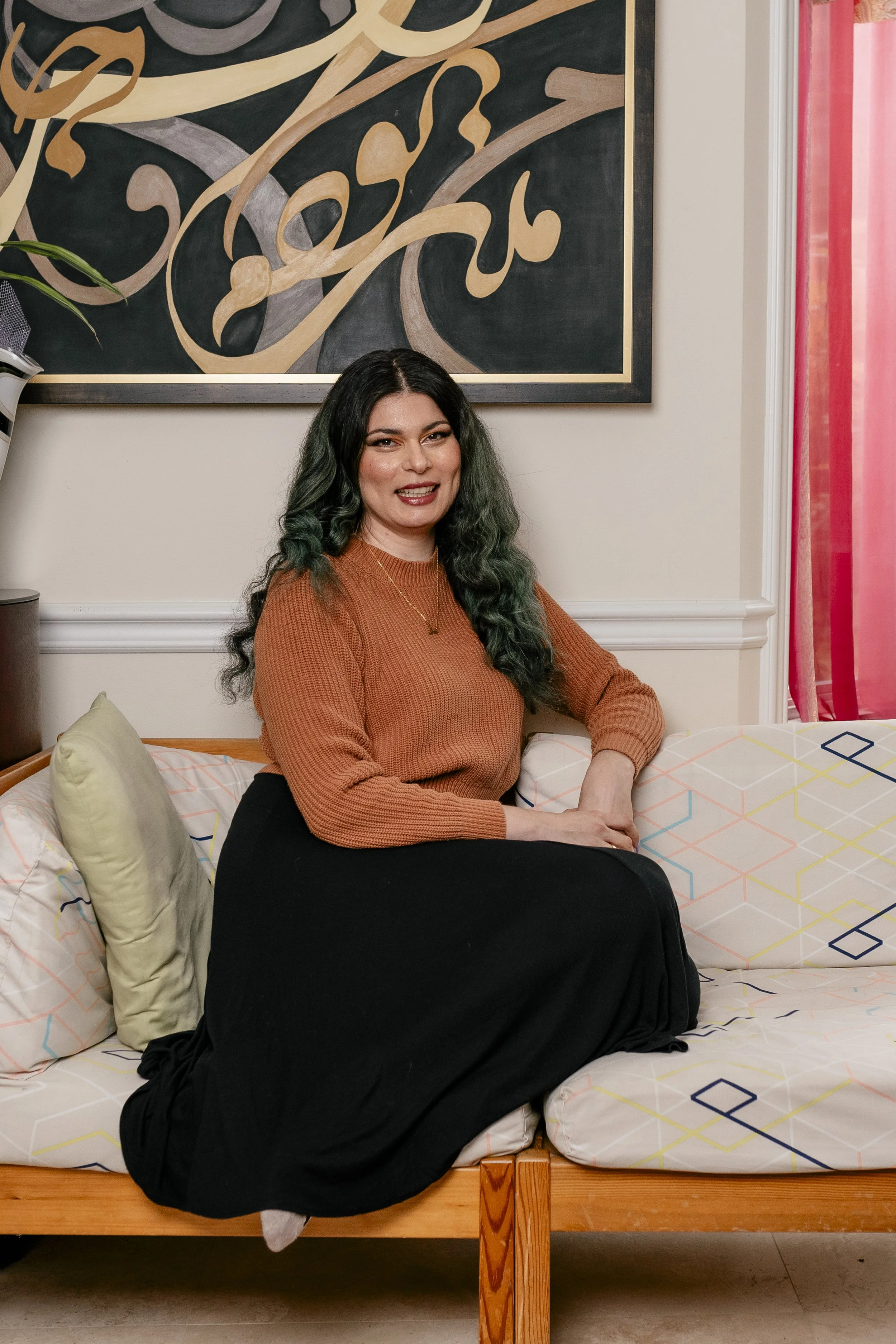
ABOUT YOUR THERAPIST: SARA STANIZAI, LMFT
I'm a Licensed Marriage and Family Therapist (LMFT #98421) and the founder of Prospect Therapy. I've specialized in couples work for 15 years. I'm queer and first-gen. My training is in Relational Life Therapy, and I'm currently completing my RLT certification. I'm also trained in Gottman Method (Level 3), and in feminist and somatic approaches, with advanced certifications in transgender affirmative and bi+ affirmative practice.
I also spent years treating intimate partner violence in queer and trans couples. I know the difference between a hard pattern and an unsafe one, and I take screening seriously.
I'm direct, I have a point of view, and I don't bring a template of what your relationship should look like into the room.



COUPLES INTENSIVE FAQ
-
I'll help you see who is dominating the relationship, if that's what you mean. But no, I don't worry about who is right or wrong. I focus on how to bring you into as much balance as possible.
-
Often, yes. You don't need to be sure. We'll talk about where each of you is in the initial session and decide together whether an intensive makes sense.
-
Not necessarily, but it helps. If this is your first experience of any kind of therapy, coaching, or self-reflective work, we'll talk honestly in the Initial Therapy Session about whether this is the right place to start.
-
Most couples I see have. Past therapy usually targeted the content of the fights or the skills for having them. We start with the pattern underneath and what each of you learned to do to survive, then build skills that fit.
-
A lot of that happens before the intensive, through your initial session and intake questionnaires. And I pay more attention to how you fight than to what you fight about, which shows up quickly.
-
You don't need to arrive with the same level of certainty. You do each need to be genuinely willing.
-
Often exactly when an intensive makes sense. We'll use the Initial Therapy Session to figure out whether the timing is right.
-
Many couples spend six months or more in weekly therapy, about $7,800 with me, and longer when the pattern keeps resetting between sessions. The bigger cost is the time: months of the same fight, the distance, the nights you go to bed upset. An intensive is focused time to get to the root of the pattern and repair it, so you can spend that time enjoying each other instead.
-
No. Intensives are private pay only.
-
The deposit is non-refundable. One reschedule within 90 days subject to availability. Full policies are in the agreement you'll receive before booking.
-
No. I provide coaching nationwide and arrangements can be made for intensives outside of California.
Ready to find out if this is the right fit?
Start with a brief phone screen and get on my calendar for an initial therapy session. Take 50 minutes to understand where you are, what you need, and whether this is the right path. No commitment required before that conversation.